
 EN
EN



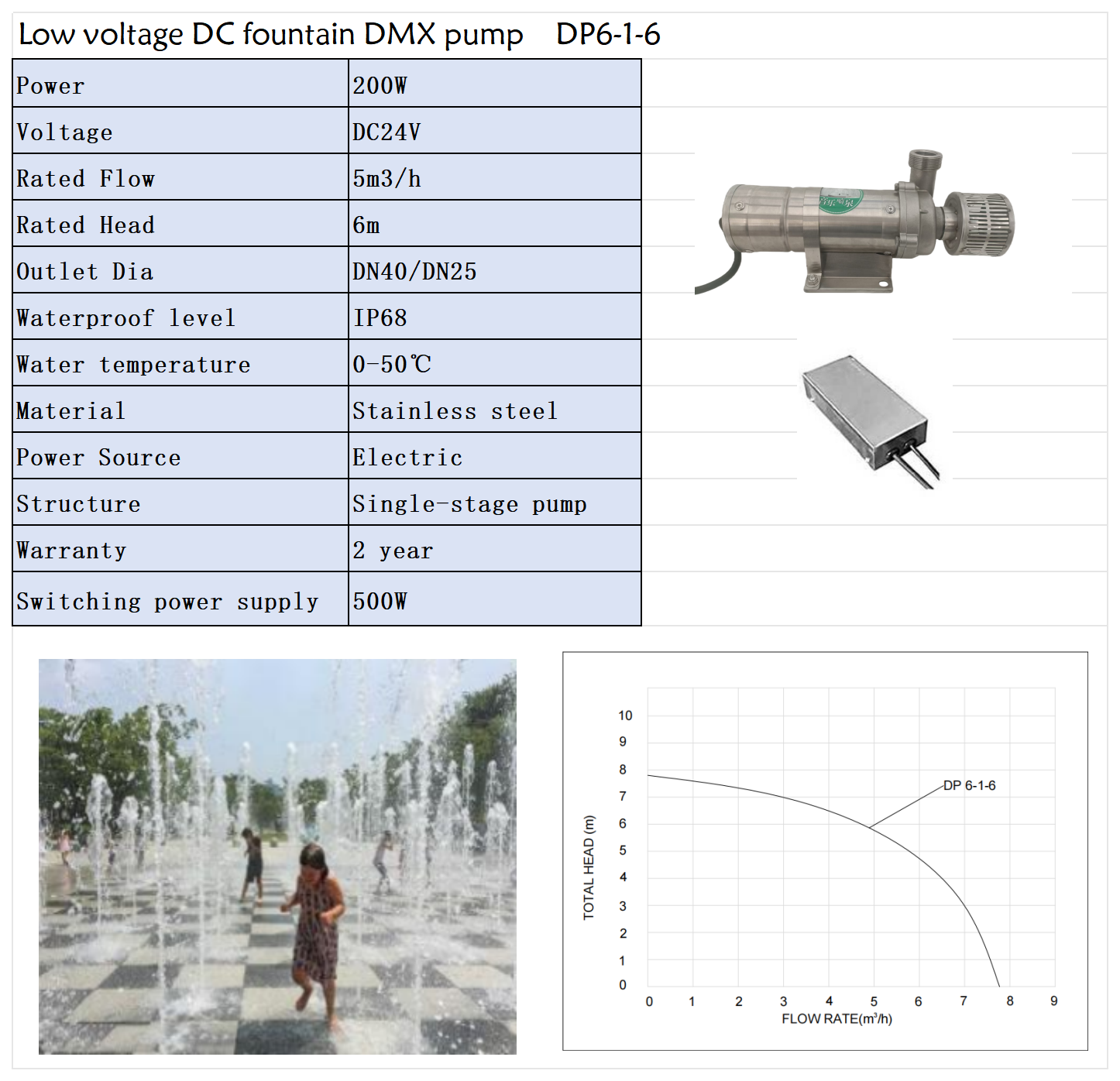
Why 24V DC Is the Safest Power Standard for DMX Fountain Pumps
Electrical safety advantages over 110V/230V AC in wet environments
Water carries electricity pretty well, which means standard 110V or 230V AC systems pose serious risks when used in fountains. The 24V DC DMX pumps work safely because they stay way below the 50V limit set out in the IEC 61140 standards that most countries follow. This makes them much safer for people around water features. When someone gets wet, AC electricity above about 30 milliamps can cause the heart to go into a dangerous rhythm problem. But with these 24V DC systems, even if something goes wrong with the insulation, the maximum current stays under 10 milliamps, so it doesn't hurt anyone. That kind of built-in protection matters a lot for parks and other places where kids might fall in or get splashed unexpectedly.
IP68 submersion rating and fault-tolerant low-voltage operation
The commercial 24V DC DMX fountain pumps come with IP68 rated waterproof enclosures and run on low energy that's considered intrinsically safe. What does IP68 mean? Well it basically means these pumps can work continuously underwater even when submerged deeper than 1 meter, which goes way beyond what most fountain installations actually need. When we compare them to those high voltage AC systems, there's a big difference. With AC systems, if the insulation breaks down, it can lead to serious problems like arcing or even fires. But since 24V DC has much less energy capacity, it just doesn't produce those dangerous discharges when something shorts out. These pumps also feature built in thermal cutoff switches along with multiple grounding points for extra safety. The whole system shuts down automatically long before things get hot enough to be a problem, making them especially good choice for places where lots of people gather around interactive water features or public spaces like city plazas.
Certification alignment with IEC 60335-1 and UL 1012 for outdoor water features
The best 24V DC DMX fountain pumps come with certifications from IEC 60335-1 for household appliances and UL 1012 for power units. These standards require pretty strict testing when it comes to how well they handle moisture, last through wear and tear, and deal with faults outside where weather can be unpredictable. What do these certifications actually mean? Well, manufacturers need to provide either double insulation or something called reinforced insulation. The pump housing also has to resist corrosion, so we're talking materials like marine grade stainless steel or those special UV stabilized plastics that don't break down under sunlight. There's even a limit on how much electricity can leak when submerged water, capped at just 0.25 milliamps. Getting third party approval against all these specs means the pumps will keep working reliably throughout seasons and meet local safety rules for businesses installing decorative water displays.
How DMX Control Delivers Real-Time Precision to Fountain Dynamics
DMX512-A protocol enabling granular flow modulation, strobing, and timed sequencing
DMX512-A has become pretty much the standard way that dynamic fountains communicate their movements. It basically takes those digital signals we send out and turns them into exact hydraulic actions in the water features. The system works with about 512 separate channels in each universe, plus an 8 bit resolution ranging from 0 to 255. This setup allows for really accurate control of water flow down to milliseconds, which means we can create sharp flashes, gradual increases in water height, and all sorts of synchronized water displays. Compared to older timer based systems, DMX512-A doesn't cause those sudden pressure jumps when switching between different effects because it makes gradual adjustments instead. This helps keep pumps running longer and maintains the visual integrity of intricate water designs even when multiple elements are involved at once. And since the timing is so consistent, everything stays synced properly across big installations without any lag or wobbling effects.
Seamless synchronization with lighting, audio, and show control systems
The DMX512-A standard really opens up possibilities for creating immersive experiences where different elements work together seamlessly. Fountain controllers naturally connect with lighting boards, laser projectors, and sound equipment through common connections like ENTTEC Open DMX USB ports or Art-Net gateways. Imagine when the lights switch to blue during the 32nd bar of music, the fountain pumps kick into action right away to create swirling patterns without needing any special software in between. Programs like QLab and Madrix take advantage of this system to coordinate all sorts of different effects from one central timeline. Water jets can sync up with how a violin plays, or spotlights can move in time with how high the water shoots up. Venues that run shows every day save tons of headaches because they don't have to deal with those annoying delays anymore or spend extra money on complicated setups.
Top 3 Commercial-Grade DMX Fountain Pumps Rated for 24V DC Performance
Aquascape Pro DMX-24: 12W, 300 LPH, 1.8m head benchmark for reliability and DMX responsiveness
The Aquascape Pro DMX-24 has become something of a benchmark among commercial 24V DC DMX fountain pumps, pumping out around 300 liters per hour at a head height of 1.8 meters thanks to its efficient 12 watt brushless DC motor. What really stands out is the IP68 rating on its housing, which means these units can run continuously even when fully submerged. For those putting together live water displays, the DMX response time stays below 10 milliseconds, making synchronization between different fountains rock solid during performances. Constructed from materials that resist corrosion and featuring built-in thermal overload protection, this pump lasts well beyond 10,000 operating hours in tough conditions found at places like theme parks and city plazas. Plus, it keeps running at impressive 92% energy efficiency throughout its entire service life, which makes sense both environmentally and economically for operators looking to cut costs long term.
HydroSync DMX Lite: 9W, integrated PWM driver, 0–100% smooth flow control via DMX channel
The HydroSync DMX Lite packs impressive control features into a small 9 watt unit. What makes this device stand out is its built-in PWM driver which allows smooth 0 to 100% flow adjustments using only one DMX channel. This means no more those annoying step changes that ruin the look of water displays. The unit works directly with DMX512-A signals so there's absolutely no need for extra signal boxes or converters during installation. That cuts down on potential problems and makes setup much easier. At less than 400 grams and running quietly at around 25 decibels, it can be tucked away in tight spots without anyone noticing. Even when connected in chains, the signal stays strong with about 98% accuracy. This makes it particularly good for fountains where the water needs to respond smoothly and precisely to different conditions.
Proper Installation and Troubleshooting of DMX Fountain Pumps
Critical best practices: twisted-pair cabling, ground-loop isolation, and daisy-chain limits (<32 devices)
Reliable DMX operation in fountain environments depends on three foundational installation practices:
- Twisted-pair cabling (e.g., Belden 9841 or equivalent) suppresses electromagnetic interference from pumps, motors, and nearby lighting systems
- Ground-loop isolation using opto-isolated DMX splitters prevents voltage differentials between grounded equipment—especially critical when mixing submerged pumps with above-ground controllers
- Strict adherence to the <32 device limit per DMX universe, as defined in ANSI E1.11 (DMX512-A), preserves signal integrity and timing accuracy
The protocols work within the guidelines set by IEC 62368-1 and UL 1012 standards for outdoor electronics. When something goes wrong, start checking the basics first. Look at cables to see if they're intact, double check those waterproof connectors to ensure they're sealed properly, and don't forget about that 120 ohm resistor at the end device. Most problems we see come down to two main things: signal conflicts and too many devices connected together in a chain. This happens quite often actually, making up around three quarters of all synchronization troubles. Especially when equipment is underwater, damaged connectors tend to wear out faster than anyone expects, which only makes matters worse over time.
FAQ
Why is 24V DC considered safer for fountain pumps?
The 24V DC standard is considered safer for fountain pumps because it stays below the 50V limit set by IEC 61140 standards, reducing the risk of electrical hazards even if something goes wrong with insulation.
What does IP68 rating mean for fountain pumps?
An IP68 rating means the pump can operate continuously while submerged underwater beyond 1 meter depth, offering excellent waterproof protection.
How does DMX512-A improve fountain dynamics?
DMX512-A allows for precise control of water flow and synchronization with lighting and audio, providing smoother transitions and maintaining visual integrity in complex water designs.
What are the best practices for DMX fountain pump installation?
Best practices include using twisted-pair cabling to reduce interference, ensuring ground-loop isolation, and limiting each DMX universe to fewer than 32 devices to maintain signal integrity.