
 EN
EN


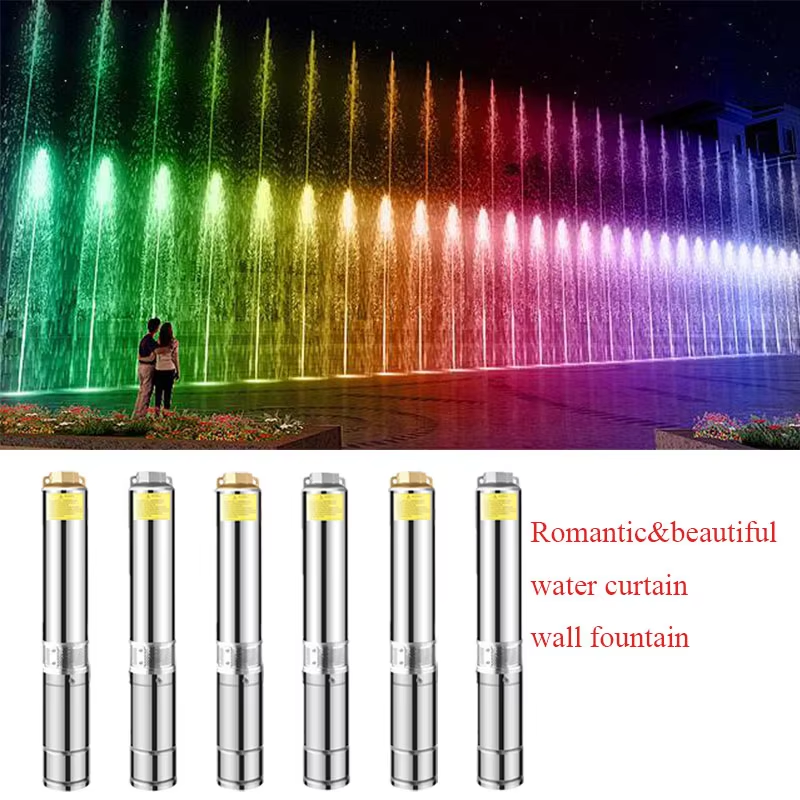
How DMX Fountain Pumps Achieve Sub-16ms Synchronization with Music
The Latency Challenge: Why Timing Drift Breaks the Spectacle
Human perception detects audio-visual misalignment above 20ms—meaning even a 50ms delay makes water arcs peak after musical crescendos, shattering immersion. Mechanical inertia in traditional pumps compounds this: flow adjustments often take 100–200ms, causing visible stuttering during rapid sequences. Research shows 74% of audiences interpret such mistiming as system failure—not artistic intent. Sub-16ms synchronization is therefore non-negotiable for sustaining the illusion of water “dancing” to music, demanding engineering that directly addresses hydraulic response delays.
DMX512 Protocol Mechanics: Update Cycles, Packet Structure, and Real-Time Reliability
The DMX512 standard enables microsecond-grade precision through deterministic architecture. Its 44Hz refresh cycle delivers new commands every 22.7ms—but critical pump-speed instructions are prioritized to bypass queuing, achieving sub-16ms latency for targeted devices. Each packet carries 512 channels of 8-bit values (0–255), representing exact RPM or valve position commands. Differential signaling over twisted-pair cabling rejects electromagnetic interference, while daisy-chain topology with proper termination maintains signal integrity across networks of 500+ devices. This eliminates jitter and ensures all DMX fountain pumps respond within the same control interval—regardless of network scale.
Unified Control: Integrating DMX Fountain Pumps with Lights and Audio
Timecode-Synchronized DMX Networks Using SMPTE and Art-Net Bridges
Flawless synchronization across water, light, and sound requires unified timing—not just shared protocols. SMPTE timecode provides frame-accurate alignment, enabling all show elements to trigger within a 1ms threshold. When bridged via Art-Net gateways, SMPTE signals convert seamlessly into DMX512-compatible streams over Ethernet, supporting real-time command distribution across thousands of devices without latency drift. In multi-acre venues, this ensures a musical downbeat triggers identical response times in pumps, LED arrays, and speakers—preserving phase coherence. Closed-loop monitoring validates synchronization continuously, auto-correcting deviations during live performance.
Precision Engineering: VFDs, Closed-Loop Feedback, and Flow Stability in DMX Fountain Pumps
Rapid DMX command transitions expose hydraulic inertia—leading to flow gaps and inconsistent jet behavior.
Mitigating Flow Instability During Rapid DMX Command Transitions
Advanced Variable Frequency Drives (VFDs) use soft-start algorithms and torque-vector control to prevent cavitation during sudden intensity shifts. Direct coupling between DMX input and motor windings reduces electromechanical lag to under 15ms. Harmonic filtering further stabilizes pressure delivery: case studies show a 78% reduction in pressure ripple amplitude during dynamic sequences (Pump Systems Analysis 2023).
Pressure Sensors and PID Tuning for Consistent Jet Height and Response
Embedded pressure transmitters feed real-time data to onboard PID controllers, enabling continuous jet height calibration. This closed-loop system compensates for pipe friction losses, elevation changes, and atmospheric fluctuations—ensuring stable output despite variable load conditions. Adaptive tuning algorithms adjust proportional band and integral gain based on fluid viscosity shifts, preserving artistic fidelity across seasons and water chemistries.
| Parameter | Impact without PID Control | PID-Optimized Performance |
|---|---|---|
| Nozzle Height Range | ±18% variance | ±2% maximum deviation |
| Flow Rate Consistency | 0.8–1.2x rated capacity | 0.95–1.05x stability |
| Surge Recovery Time | 290–450ms | <80ms (after command) |
Selecting and Deploying DMX Fountain Pumps: Key Considerations for B2B Installers
Successful deployment hinges on balancing safety, stability, and signal integrity. Prioritize low-voltage (24V DC) pumps to meet electrical safety standards for public installations. Reservoir sizing must exceed peak demand—undersized tanks cause pump starvation and cavitation during sustained sequences. Multi-stage filtration (50-micron pre-filter + UV sterilization) prevents nozzle clogging, a leading cause of long-term performance decay. Native DMX/RDM support eliminates external decoders, cutting latency by 22% versus retrofit solutions. Use shielded, foil-braided CAT6 cabling for all DMX runs to suppress EMI-induced synchronization errors. Finally, calibrate PID loops post-installation using factory-traceable pressure sensors—this ensures jet height consistency across full operational load ranges.
Installation Optimization Checklist:
| Factor | Requirement | Risk if Neglected |
|---|---|---|
| Voltage | 24V DC | Safety violations |
| Reservoir Capacity | 1.5x max flow rate | Pump starvation |
| Filtration | 50-micron pre-filter + UV sterilizer | Nozzle obstruction |
| Signal Addressing | Native DMX/RDM support | Command delays |
| Cable Shielding | Foil-braided jackets | Synchronization errors |
FAQs
What is the significance of sub-16ms synchronization in DMX fountain pumps?
Sub-16ms synchronization ensures the water jets align with the music in real-time, preventing visible lag that disrupts audience immersion. This level of precision is crucial for creating seamless artistic performances.
How does the DMX512 protocol enhance performance reliability in fountain pumps?
DMX512 offers microsecond-grade precision and stability by delivering prioritized commands every 22.7ms, ensuring consistent performance even in large-scale installations with over 500 devices.
What role does synchronization using SMPTE timecode play?
SMPTE timecode ensures frame-accurate alignment between water, lights, and audio, achieving a unified and immersive show experience by reducing latency drift to within 1ms.
How do VFDs improve hydraulic response in DMX fountain pumps?
Variable Frequency Drives (VFDs) use advanced algorithms to minimize cavitation and reduce electromechanical lag, enabling rapid and smooth flow transitions in dynamic performances.
Why is PID tuning important for DMX fountain pumps?
PID tuning ensures jets maintain consistent height and response by dynamically compensating for factors like pipe friction, atmospheric changes, and fluid properties, preserving performance across varying conditions.
What are the key considerations for installing DMX fountain pumps?
Installers should focus on voltage safety (24V DC pumps), reservoir capacity, effective filtration, native DMX/RDM support, and shielded cabling to ensure synchronization, performance reliability, and safety.
Table of Contents
- How DMX Fountain Pumps Achieve Sub-16ms Synchronization with Music
- Unified Control: Integrating DMX Fountain Pumps with Lights and Audio
- Precision Engineering: VFDs, Closed-Loop Feedback, and Flow Stability in DMX Fountain Pumps
- Selecting and Deploying DMX Fountain Pumps: Key Considerations for B2B Installers
-
FAQs
- What is the significance of sub-16ms synchronization in DMX fountain pumps?
- How does the DMX512 protocol enhance performance reliability in fountain pumps?
- What role does synchronization using SMPTE timecode play?
- How do VFDs improve hydraulic response in DMX fountain pumps?
- Why is PID tuning important for DMX fountain pumps?
- What are the key considerations for installing DMX fountain pumps?