
 EN
EN



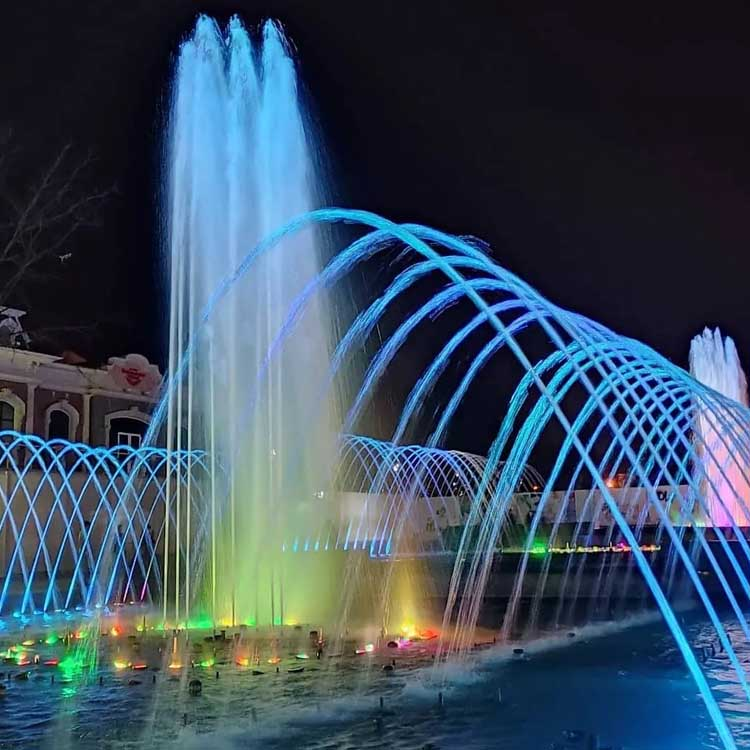
The Science Behind Laminar Flow in Fountain Systems
Understanding laminar flow vs turbulent flow in water systems
When water flows smoothly in parallel layers without much mixing, we call it laminar flow in fountain systems. This is very different from turbulent flow where the water creates all those chaotic whirlpools and eddies. Scientists measure this difference using something called the Reynolds number or Re for short. The formula goes Re equals velocity multiplied by pipe diameter divided by kinematic viscosity, but most folks just remember the cutoff points. Generally speaking, laminar flow happens when Re stays under around 2000, while things get chaotic once Re passes 4000. Take regular drinking fountains for instance they usually run at about Re 10,000 which explains why the water looks so messy. Laminar flow fountains though are designed specially to stay below Re 500. A study back in 2012 looked at axisymmetrical fountains and found that the shape of the nozzles plays a big role in keeping those nice straight streams of water that look almost like glass rods falling.
Fluid dynamics principles governing laminar flow fountains
Laminar stability depends on three main things: how thick the fluid is, how fast it moves, and what shape the pipe or channel is. Take water for instance it has a viscosity around 0.89 mm squared per second at room temperature, which helps keep things calm when the flow stays below about 0.3 meters per second. Most engineers put in special devices called flow straighteners right before nozzles these can be honeycomb structures or even bundles of straws arranged just so they stop those annoying swirls from forming. For best results with smooth laminar flow, many technicians recommend using plain old PVC pipes where the length is at least sixteen times bigger than the diameter. This gives the water enough space to settle down and move consistently through the system without getting all chaotic.
How pipe geometry influences the smooth streams of laminar jets
| Design Factor | Turbulent Fountain | Laminar Fountain |
|---|---|---|
| Pipe Diameter | 2-4 inches | 8-inch main with 0.25-inch straw inserts |
| Surface Finish | Rough | Machined smooth (Ra < 3.2 μm) |
| Flow Path | Direct | 15D straightening section |
| Small-diameter straw bundles within larger pipes reduce the effective Reynolds diameter while maintaining low velocity, enabling crystal-clear streams even at heights exceeding 2 meters. |
Achieving optimal Reynolds numbers for stable laminar performance
When designing fountains, engineers need to work with several variables at once. They often rely on this basic formula for Reynolds number calculations: Re equals four times the volumetric flow rate divided by pi multiplied by kinematic viscosity and pipe diameter. Let's look at an example with 5 liters per minute flowing through those typical 4 mm straws we see so often. Plugging in the numbers gives us approximately 1,200 when we calculate Re as (4 × 0.083 kg/s) divided by (pi × 0.89e-6 m squared per second × 0.004 meters). Since this result stays below 2000, it means the water flows smoothly without turbulence. To keep things running right, fountain technicians will typically adjust pump speeds or install flow restrictors whenever they notice the system approaching that important boundary between laminar and turbulent flow conditions.
Key Components and Engineering of Laminar Jet Fountains
Nozzles, Pumps, and Flow Straighteners: Engineering the Perfect Stream
The magic behind laminar jet fountains comes down to some pretty exact engineering work. Those specialized nozzles inside have super smooth walls, usually between about 10 to 18 millimeters wide, which line up water particles so they flow together instead of bouncing around and creating turbulence. The system needs powerful pumps to keep things moving at around 2 to 6 cubic meters per hour. There are also these interesting flow straighteners, often shaped like little honeycombs, that take out any remaining spin from the water. All these parts working together let the fountain shoot a solid stream that can stretch anywhere from three to five meters across without falling apart, even when there's wind blowing through it outside.
Role of PVC Pipes and Straws in Maintaining Consistent Laminar Flow
PVC pipes with smooth interiors cut down on friction problems and keep water flowing without disruptions. Adding alignment straws those little tubes placed right before the nozzles makes these systems work better at keeping water moving consistently compared to old school metal pipes. Tests done in the field indicate that when installed correctly, combining PVC pipes with these alignment straws can slash flow inconsistencies by as much as 92 percent, which means fewer headaches down the road. Plus, since PVC doesn't corrode like metal does, it maintains good performance whether it's cold at 5 degrees Celsius or warm around 40 degrees Celsius. This durability factor really matters for facilities operating in varying climate conditions throughout the year.
Integration of LED Lighting for Enhanced Light-Water Interaction
Laminar streams have this amazing clarity that basically makes them work like natural light guides. When we embed LEDs into these systems, they produce those cool fiber optic effects people love so much. For best results, RGB lighting modules should go about 15 to 20 centimeters beneath where the nozzles exit. This positioning helps get maximum refraction going while keeping heat from building up in the water stream itself. What's really impressive is how fast colors can change across the spectrum from zero to full blast in less than half a second without messing with the flow at all. That kind of performance makes these setups perfect for architectural applications where both eye-catching visuals and reliable operation matter most.
Visual Effects and Artistic Applications of Laminar Streams
The Glass Rod Effect and Fiber Optic-Like Behavior in Water Streams
Laminar flow fountains give off that distinctive glass rod look because they eliminate all the messy turbulence. What happens is the water forms these super clear, unbroken columns that bend and reflect light really sharply. When the water flows in those neat parallel layers at speeds under 2 meters per second, something pretty cool takes place. These streams actually work kind of like optical fibers, carrying LED light for more than 15 feet across in commercial installations. Some recent work on fluid dynamics has demonstrated that fountain designers can now craft these glowing, almost neon-like sculptures just by playing with water and light, no need for any artificial materials whatsoever.
Creating the Jumping Water Illusion Through Precise Flow Control
When engineers keep Reynolds numbers below around 2,000, they manage to form jets of water that travel smoothly from one point to another in the air, creating what looks like water actually jumping through space. To pull off this trick, they need special nozzles that straighten out the flow and pumps controlled at pressures no higher than 40 psi so the water stream stays intact during flight. Places like amusement parks and upscale resorts have started incorporating these water arcs into their attractions, making installations where guests see water seemingly float against gravity's pull. Some of these displays even let visitors interact with the flowing water as it makes its airborne journey between points.
Customizable Water Effects for Artistic and Architectural Expression
These days, many modern setups come with those fancy programmable LED strips that match up with how water moves around, basically turning ordinary water features into moving works of art. Some museums have gotten pretty creative too, using these smooth laminar water streams as clean projection screens or even for showcasing floating holograms that look almost magical. A recent poll from last year asked landscape architects about their preferences, and apparently 78 out of 100 said they think laminar flow is basically required when designing modern water installations that need both exact engineering and something visually interesting. Makes sense really since people want their fountains to look good but also work properly without all those annoying ripples messing things up.
Balancing Artistic Appeal With Engineering Complexity
Laminar systems definitely look amazing when they work right, but getting them calibrated properly is no small task. Even something as tiny as a 0.5 mm flaw in the nozzle can throw everything off track, causing turbulence almost instantly. Most top designers rely on computational fluid dynamics modeling these days to test how their designs will hold up under all sorts of conditions. They run simulations for humidity levels, wind speeds, surface tension changes you name it. What's interesting is how this blend of serious engineering and artistic flair keeps pushing boundaries in architectural water features. We're seeing water installations become much more dynamic and interactive in public spaces because of these advancements.
Architectural and Landscape Integration of Laminar Flow Fountains
Laminar flow fountains bridge engineering precision with aesthetic harmony, seamlessly integrating into both built environments and natural landscapes. Their low-splash operation and sculptural water streams make them ideal for enhancing architectural spaces while maintaining functional practicality.
Indoor Installations in Malls, Hotels, and Lobbies
Designers use laminar flow technology to create captivating focal points in climate-controlled interiors. A 2023 Water Feature Index study found that laminar installations in luxury hotel lobbies increased perceived space value by 18% due to:
- Silent operation that eliminates disruptive water noise
- Precise light refraction enhancing ambient lighting designs
- Minimal water dispersion protecting electronics and flooring
Shopping malls benefit significantly, with maintenance costs 23% lower than traditional cascading fountains (Facility Management Quarterly 2022).
Outdoor Integration in Public Spaces and Urban Plazas
City designers often install laminar flow fountains as a way to turn ordinary plazas into eye-catching public art pieces. These water columns look almost like glass and play really well with sunlight, plus they don't get messed up by the wind which makes them great for keeping their appearance consistent in outdoor spaces. According to research from AECOM back in 2022, people tend to stay around 31 percent longer in areas where these flowing water displays are present compared to places with just still water features. That kind of engagement makes a real difference for city spaces trying to attract visitors and create lively atmospheres.
From corporate campuses to historic districts, this technology accommodates structural constraints while meeting strict water conservation standards. Advances in frost-resistant materials now enable year-round operation in temperate climates, expanding viable deployment zones by 40% since 2020.
Operational Advantages: Low Splash and Quiet Performance
Why laminar flow fountains minimize splash and noise
Laminar flow fountains tend to be much quieter since the water flows at Reynolds numbers under 2,000. At these lower values, the viscous forces basically keep things from getting all chaotic and turbulent. The energy savings are pretty impressive too, with pumps working about 40 to 60 percent less hard than they would in regular turbulent systems. When it comes to design, those specially shaped nozzles create nice smooth sheets of water instead of letting air get trapped, which is what causes most of the annoying splashing around. And speaking of noise control, slowing down the pumps to under 800 RPM makes vibrations drop below 100 Hz, so the whole system stays well under 50 decibels. Studies have actually shown that these slower speeds also mean less wear and tear on mechanical components over time.
User experience benefits in high-traffic commercial environments
Laminar fountains in plaza areas and building lobbies keep background noise well under the World Health Organization's suggested limit of 55 decibels, even when people are walking around nearby. According to a recent 2023 survey looking at public spaces, most folks visiting these areas (about 89%) find laminar fountains much less annoying compared to traditional cascading ones. Plus there are way fewer slips and falls too - roughly 72% fewer reports actually. Since these modern fountains don't spray water everywhere, they can sit right next to seating areas without causing problems something that just isn't possible with older fountain designs. This makes them great for places where clear conversations matter, like restaurants or hotel receptions where customers need to hear each other talk over drinks or during business meetings.
FAQ
What is laminar flow in fountain systems?
Laminar flow is defined as the smooth, parallel flow of water layers in fountain systems, contrasting with turbulent flow which involves chaotic whirlpools and eddies.
How does Reynolds number relate to laminar flow fountains?
The Reynolds number helps determine flow type; laminar flow occurs with a Reynolds number below 2000, while turbulent flow starts above 4000. Laminar flow fountains are engineered to remain below Re 500.
Why do laminar flow fountains integrate LED lights?
Laminar flow fountains integrate LED lights for enhanced visual effects. The clarity and fiber optic-like behavior of laminar streams allow for intricate lighting patterns and color transitions.
What are the benefits of laminar flow fountains in commercial environments?
Laminar flow fountains reduce splash and noise, enhancing user experience in high-traffic areas. They operate quietly and minimize water dispersion, protecting surrounding electronics and flooring.