
 EN
EN



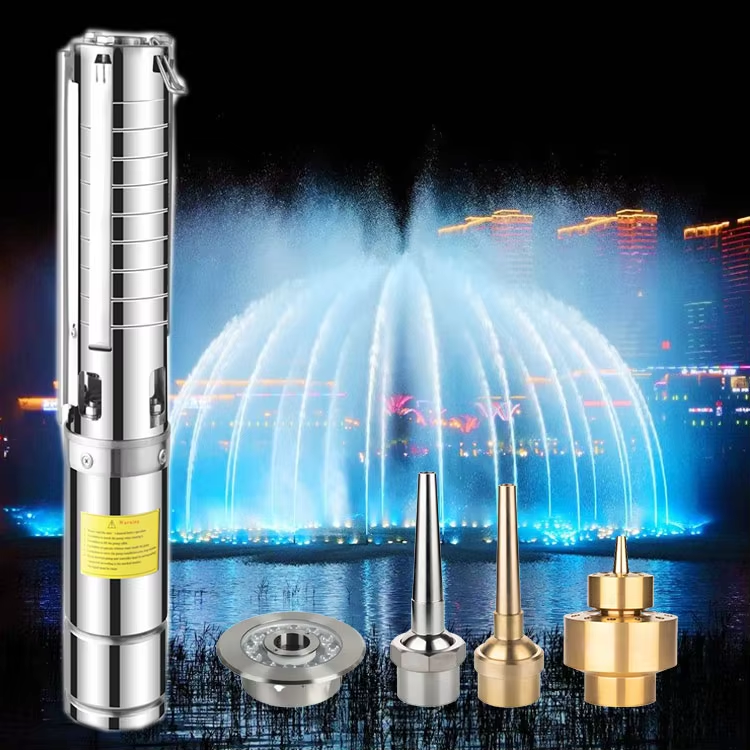
Precise, Low-Latency Synchronization with Music via DMX Fountain Pump
How DMX Protocol Enables Frame-Accurate Water Movement Timing
The DMX512 protocol—originally developed for professional lighting—delivers control data in a robust, serial digital stream at up to 250 kbps. Each frame carries up to 512 channels and updates at 30–44 Hz, meaning commands refresh every ~23–33 ms. A DMX fountain pump with an integrated receiver acts directly on each incoming frame, translating channel values into immediate motor speed or direction adjustments—no external decoder required. This eliminates buffering, protocol conversion, and signal smoothing delays that plague analog or PWM-based systems. As a result, water jets initiate, halt, or modulate height within a single frame, achieving true frame-accurate timing aligned to musical transients down to the millisecond.
Sub-16ms Latency: Why DMX Fountain Pumps Outperform PWM and Analog Alternatives in Beat-Matching
For imperceptible beat-matching, end-to-end latency must remain below 16 ms—the human threshold for detecting rhythmic delay. DMX fountain pumps consistently meet this benchmark: their direct digital path from controller to motor driver avoids the 20–40 ms overhead introduced by DMX-to-analog or DMX-to-PWM decoders. Combined with a typical pump response time of 10–15 ms and the inherent DMX frame interval (~23 ms at 44 Hz), total system latency stays well within the critical window. In contrast, legacy analog and PWM systems rely on voltage scaling or pulse-width modulation that demands filtering and calibration—adding jitter, drift, and unpredictable lag. That consistency is essential when water must “hit” the snare or swell with a cymbal crash; even one missed transient breaks the illusion of choreographed motion.
Unified Control of Water, Light, and Sound on a Single DMX Network
A single DMX network enables seamless integration of water, light, and audio—transforming three independent systems into one cohesive performance engine. With the DMX fountain pump as the core actuator for hydraulic movement, operators no longer need separate controllers, gateways, or timing layers for each domain. This unified architecture reduces wiring complexity, accelerates programming, and virtually eliminates inter-device timing drift.
One Protocol, Three Domains: Simplified Architecture with DMX Fountain Pump Integration
DMX serves as a common language across disciplines: lighting consoles, audio cueing systems, and DMX-enabled fountain pumps all interpret the same 512-channel data stream. Engineers daisy-chain devices on a single bus—eliminating the need for PLCs dedicated to water control, standalone lighting desks, or custom audio-trigger interfaces. The same controller that dims RGBW LEDs and triggers stereo stems also sends precise speed and direction commands to each pump. This convergence cuts hardware count, slashes commissioning time, and makes diagnostics intuitive: if a jet fails to rise on cue, the issue is traceable to one data stream—not three disparate protocols.
Real-World Validation: Bellagio Fountain Upgrade — 42% Lower Integration Complexity Using DMX Fountain Pumps
During a major Las Vegas fountain overhaul, engineers replaced fragmented multi-protocol infrastructure with a fully DMX-integrated system—retrofitting pumps with native DMX receivers and aligning them to the same universe used for lighting and audio playback. The result? A documented 42% reduction in integration complexity, measured by configuration effort, gateway dependencies, and custom scripting volume. With only one configuration tool, fewer translation layers, and no proprietary middleware, tuning became faster, more repeatable, and significantly less error-prone.
Intelligent Audio-to-DMX Translation for Dynamic Water Choreography
How Smart Controllers (e.g., Oase WECs II) Convert Audio Waveforms into Precise DMX Fountain Pump Commands
Modern smart controllers like the Oase WECs II bridge music and hydraulics in real time—analyzing live or pre-recorded audio to generate responsive, expressive DMX output. Using Fast Fourier Transform (FFT) analysis, these systems decompose waveforms into frequency bands and amplitude envelopes, then map sonic features directly to pump behavior:
- Low frequencies (20–250 Hz) → High-pressure bursts and rapid jet activation
- Midrange (250–2,000 Hz) → Sustained arcs and directional sweeps
- Treble (2–10 kHz) → Fine mist, ripple effects, and subtle modulation
- Crescendos/decrescendos → Smooth, tempo-synchronized height ramping
Latency compensation algorithms adjust for processing delay, ensuring splashes land precisely on beat—even during complex polyrhythms. The outcome is not just reactive water, but choreography that interprets musical phrasing, dynamics, and timbre with artistic nuance.
Scalable, Future-Ready Control: DMX Fountain Pump Compatibility with ArtNet and Modbus
Today’s DMX fountain pumps are built for interoperability beyond the stage. Leading models support ArtNet, enabling DMX data transport over standard Ethernet—so pumps can be controlled from any networked computer, media server, or show-control software without running dedicated DMX cable. Simultaneously, Modbus RTU or TCP support allows facility managers to monitor pump status, speed, temperature, and fault codes directly through industrial PLCs or building management systems (BMS). This dual-protocol design future-proofs installations: scaling up means assigning IP addresses or Modbus register maps—not rewiring entire DMX buses. Whether expanding a theme-park fountain or integrating with a smart venue’s infrastructure, the pump remains both an artistic tool and an operational asset.
FAQs
What is DMX512 protocol, and how does it work?
DMX512 is a digital communication protocol designed for lighting control, but it also integrates with fountain pumps to enable precise timing. It sends control signals at high speeds, allowing devices to adjust their behavior in sync with a central controller.
Why is latency so critical for beat-matching with fountain pumps?
Latency under 16 ms ensures that water movements perfectly align with musical beats, creating seamless choreography. Higher latency would create perceptible delays that disrupt synchronization.
What benefits do DMX fountain pumps offer over analog or PWM systems?
DMX fountain pumps provide lower latency, greater consistency, and direct digital control, eliminating the need for additional converters and minimizing errors introduced by filtering or calibration.
What is the significance of ArtNet and Modbus compatibility in DMX fountain pumps?
ArtNet allows DMX data transport over Ethernet, simplifying remote control. Modbus provides detailed pump monitoring and integration with industrial systems, ensuring scalability and future readiness.
How do smart controllers like Oase WECs II enhance water choreography?
Smart controllers analyze audio signals in real time, converting them into DMX commands for fountain pumps. This translates musical dynamics into expressive water movements for artistic performances.
Table of Contents
- Precise, Low-Latency Synchronization with Music via DMX Fountain Pump
- Unified Control of Water, Light, and Sound on a Single DMX Network
- Intelligent Audio-to-DMX Translation for Dynamic Water Choreography
- Scalable, Future-Ready Control: DMX Fountain Pump Compatibility with ArtNet and Modbus
-
FAQs
- What is DMX512 protocol, and how does it work?
- Why is latency so critical for beat-matching with fountain pumps?
- What benefits do DMX fountain pumps offer over analog or PWM systems?
- What is the significance of ArtNet and Modbus compatibility in DMX fountain pumps?
- How do smart controllers like Oase WECs II enhance water choreography?