
 EN
EN



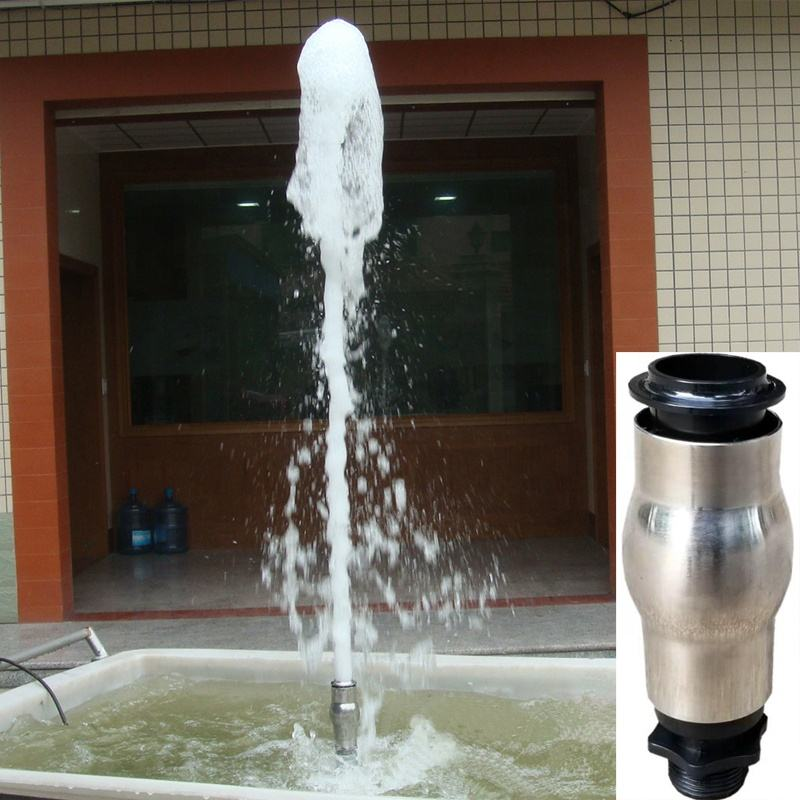
The Science Behind Foam Jet Fountain Nozzles
Venturi Aeration: How Air-Water Mixing Creates Stable Foam
Foam jet fountain nozzles work based on something called the Venturi effect which creates those nice foamy displays people love so much. When water gets pushed through a narrow part of the nozzle, the pressure goes down and this makes a kind of vacuum that sucks in air from special openings. What happens next is pretty interesting stuff. The water and air mix together in a chaotic way that breaks the water into tiny bubbles. Getting good foam requires careful design inside these nozzles. Some models have little barriers or floating balls that help spread out the air evenly across the water stream. This ensures all the bubbles are about the same size and spread throughout the water properly. The end product? A big fluffy foam that doesn't splash around too much, perfect for kids playing in interactive fountains. Plus there's another benefit nobody really talks about but is important none the less. Since the water contains lots of oxygen, it actually keeps the water quality better in systems where water gets reused over and over again.
Hydraulic Principles Governing Flow, Pressure, and Foam Consistency
Three hydraulic variables govern foam performance:
- Flow Rate: Higher volumes yield denser foam columns but increase pump energy demands
- Working Pressure: 40–60 PSI typically delivers optimal bubble density without excessive misting
- Nozzle Diameter: Wider orifices reduce velocity for softer, more diffuse foam; narrower openings enhance projection and structural integrity
Imbalance among these factors compromises foam stability—for instance, inadequate pressure at a given flow rate leads to incomplete aeration and rapid collapse. Engineers use computational fluid dynamics (CFD) modeling to predict turbulence behavior and optimize nozzle design across real-world operating ranges, including variable supply pressures and ambient conditions.
Key Performance Specifications for Fountain Nozzle Selection
Balancing Working Pressure, Flow Rate, and Projection Height
Getting the right foam jet nozzle means finding the sweet spot between working pressure (measured in psi), how much liquid flows through per minute (GPM), and how high the foam needs to project vertically. Boosting pressure does help get farther, maybe around 15% extra reach when we crank up the pressure by 20%. But there's a catch - that same pressure increase can eat up about 30% more energy for the pump, as noted in a recent study from Fluid Dynamics Journal. When it comes to flow rates, matching them to what the basin can handle is crucial. Too much water flowing through a small space just ends up making a mess with all that splash over the edges. Things get even trickier outdoors. Any nozzle shooting foam more than eight feet typically needs some kind of flow stabilizer to keep the pattern from getting messed up by wind gusts. Taking these factors seriously saves money in the long run by avoiding issues like pump cavitation damage, wasted mist that doesn't stick where needed, or having to replace nozzles way before they should wear out.
Inlet Compatibility and Integration with Standard Plumbing Systems
Getting everything working properly starts with checking the inlet threading type (either NPT or BSP) along with the pipe size against what's required by local plumbing codes and existing infrastructure. Commercial grade nozzles typically work with 1/2 inch to 2 inch NPT fittings, but older systems might need special bushings or adapters during installation. For good foam quality, maintaining steady inlet pressure around 15 to 25 psi matters a lot because when pressure falls below 10 psi, the air mixing gets messed up and the foam just doesn't hold together right. Technicians installing these systems need to compare nozzle specifications with actual water pressure conditions at each location, paying attention to materials like PVC which has different flow characteristics compared to copper pipes. Testing pressures before installation saves time and money later on by catching issues early and keeping the whole system running reliably for years.
FAQ
What is the Venturi effect in foam jet nozzles?
The Venturi effect refers to a reduction in fluid pressure that occurs when a fluid flows through a constricted section of pipe, creating a vacuum that draws in air to mix with water, forming foam.
Why is maintaining inlet pressure important for foam quality?
Maintaining inlet pressure is crucial because inadequate pressure leads to improper air mixing, causing the foam to become unstable and less effective.
What does CFD modeling do for fountain nozzle design?
Computational fluid dynamics (CFD) modeling helps predict turbulence behavior, allowing engineers to optimize nozzle design for better performance under varying operational conditions.