
 EN
EN


Why High Jet Fountain Nozzles Define Musical Fountain Impact
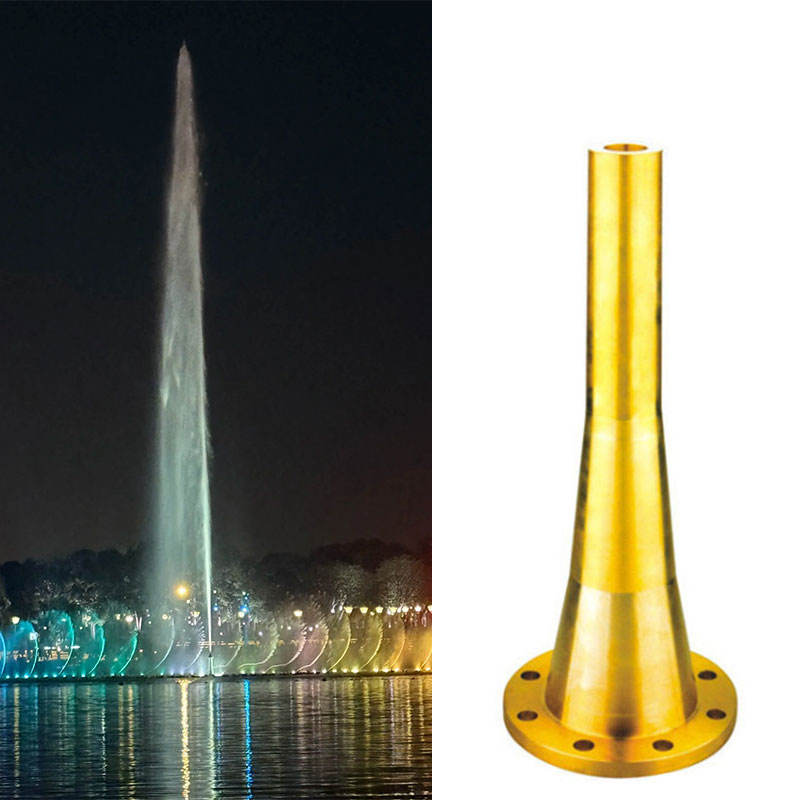
The high jet nozzles are what really grab attention during those fancy musical fountain displays, turning water pressure into something almost artistic. These special parts shoot up those tall vertical streams that can go over 30 meters high, creating those impressive sights people remember from great water shows around the world. What makes them so effective boils down to a few key things working together well. First there's the accuracy of how they control water flow, then comes their ability to react quickly to changes in music or lighting, and finally their sheer visual presence that dominates whatever space they're installed in.
Mist and foam nozzles are great for creating atmosphere, but high jet nozzles do something different altogether. They produce those crisp, straight water streams that really bring music to life visually. These jets work between about 80 and 150 psi, which lets them keep their shape even when making quick turns or sudden shifts in direction. Getting this right takes some serious engineering behind the scenes to stop the water from breaking apart mid-air. The real magic happens when everything lines up with the music's peaks and valleys. Suddenly, the water seems to move along with the rhythm itself, almost dancing to the beat. Special control systems make sure each movement matches the music down to the millisecond, creating those unforgettable visual experiences we all remember from shows and performances.
What makes musical fountains so visually striking comes down to these special nozzles that really grab people's eyes. When we look at them, those tall vertical jets stand out because they contrast with everything else happening below. They also help set the rhythm for what's going on around them. Plus, designers love using them as canvas for all sorts of colorful lights. Imagine trying to make a fountain show work without these big jets creating that wow factor. The whole thing just wouldn't have the same punch. Water would move, sure, but it wouldn't tell a story or make people feel anything special. That's why parks and public spaces invest in these features when they want to create memorable experiences for visitors.
How Fountain Nozzle Synchronization Enables Real-Time Water Choreography
PID-Controlled Actuation for Millisecond-Accurate Fountain Nozzle Response
Musical fountain designers rely on Proportional-Integral-Derivative (PID) controllers to get that razor sharp timing when water dances to music. These smart systems constantly check how far off the nozzles are from where they should be according to the programmed show, then make tiny corrections anywhere from 50 to 100 times every second. What makes this work so well is the feedback mechanism that cuts out any delay, giving around plus or minus 5 milliseconds of response time. That kind of speed matters a lot when water needs to hit those exact musical beats. Behind the scenes, high pressure solenoids and servo motors take those microscopic adjustments and turn them into immediate changes in water flow. The end result? Water streams that follow along with crescendos and staccato notes without anyone noticing even a fraction of a second delay. Industry tests have found that PID systems cut down on choreography errors by about 92% compared to older methods, which explains why serious fountain installations simply can't do without them for anything but the simplest displays.
Seamless DMX-512 Integration: Coordinating Fountain Nozzle Motion with Light and Audio
The DMX-512 system brings together fountain nozzles, lights, and sound all under one digital control framework. Every single nozzle gets its own set of DMX channels that handle things like how high the water jets go from 0 to full blast, where they point horizontally between minus 45 degrees and plus 45 degrees, plus how strong the water flows at rates ranging from half a liter per second up to twelve liters. The control programs actually translate what we hear in music - those low bass tones and sharp treble sounds - into DMX commands. When someone drops a deep bass line, the fountains shoot out 20 meter high columns lit up red, whereas higher pitched sounds make the water spray around quickly in different directions colored blue. Designers can now create literally thousands of different effects using time based editing tools. Real world setups show about 97 percent accuracy when running over 500 DMX devices at once, which means audiences get to see amazing shows where water moves exactly in sync with the beat.
Fountain Nozzle Design Fundamentals: Balancing Hydraulic Performance and Aesthetic Control
Jet Integrity at 80–150 psi: Material, Orifice Geometry, and Turbulence Suppression
Getting those continuous water streams working properly under pressure needs some really careful engineering work. Stainless steel made for marine use holds up against rust about five times better than regular brass alloys when installed in fountains, which means these installations stay structurally sound and function hydraulically for much longer periods. The shape of the nozzle opening makes all the difference in how water flows through it. Research from last year's Fluid Dynamics Report showed that nozzles with a 15 degree angle where they narrow then widen again cut down on turbulence problems by around forty percent compared to simple straight hole designs. When manufacturers polish the inside surfaces down to less than 0.8 microns roughness average, they're actually reducing disturbances in the water flow pattern. This helps maintain smooth laminar flow instead of chaotic turbulence, something absolutely necessary if fountain displays want to create those crisp water shapes during synchronized performances.
Flow–Height Dynamics: Optimizing Fountain Nozzle Output Across 0.5–12 L/s for Choreographed Height Variation
Getting accurate height control requires careful balancing of how much water flows through versus how high it shoots up. For every extra liter per second pumped through the system, water jets typically rise about 0.8 meters when operating under normal pressure conditions. This means we can program everything from gentle misting effects all the way up to impressive 15 meter high displays. Modern designs for these systems include several clever features. There are pressure compensation chambers that keep heights within about 3% accuracy even when pumps aren't running perfectly smooth. Some systems use Venturi effect principles to boost flow rates significantly while using less power overall. And most have adjustable openings that let operators switch smoothly between low flow settings as small as half a liter per second right up to maximum capacity at 12 liters per second. All these adjustments allow what would otherwise be just basic water movement to become something much more artistic and rhythmically controlled in performance settings.
Comparing Fountain Nozzle Types for Musical Dancing Fountain Applications
Jumpingjet vs. Swivel vs. Multi-Directional Drive: Response Time, Angular Precision, and Pressure Resilience
For dynamic musical fountain performances, nozzle selection dictates choreographic capability across three interdependent parameters:
- Jumpingjet nozzles achieve sub-100ms response times via solenoid actuators—ideal for precise rhythmic bursts—but offer minimal angular movement. They maintain jet integrity up to 150 psi but lack directional flexibility.
- Swivel nozzles provide 180° horizontal rotation for sweeping arcs, though gear-driven mechanisms limit repositioning speed to 200–300ms. They tolerate moderate pressure fluctuations (80–120 psi) and balance versatility with reliability—making them well-suited for intermediate-scale shows.
- Multi-directional drive nozzles deliver full spherical movement with servo-controlled angular accuracy (±0.5°), supporting complex 3D patterns. However, their hydraulic sensitivity requires stable pressure environments below 100 psi to preserve synchronization fidelity.
Designers must prioritize based on show intent: rapid staccato sequences favor Jumpingjets; fluid spatial choreography demands multi-directional systems; and hybrid productions benefit from swivel versatility.
FAQ
What are high jet fountain nozzles?
High jet fountain nozzles are special components used in musical fountains to produce tall vertical streams of water that can reach over 30 meters high, enhancing the visual impact of fountain shows.
How do PID controllers contribute to musical fountains?
PID controllers are used to achieve precise timing in musical fountains, allowing water to synchronize with music. They make tiny corrections to nozzle positions in real-time, ensuring water movements match musical beats accurately.
What is the DMX-512 system in fountain design?
The DMX-512 system is a control framework that integrates fountain nozzles, lights, and audio. It assigns DMX channels to each nozzle for coordinating water jet heights, directions, and flow strengths in sync with music and lighting effects.
What materials are ideal for fountain nozzles?
Stainless steel made for marine use is ideal for fountain nozzles as it is more resistant to rust and maintains structural integrity better than regular brass alloys, ensuring longevity and performance.
What factors should designers consider when choosing fountain nozzles?
Designers should consider response time, angular precision, and pressure resilience based on the show’s requirements. Different nozzle types like Jumpingjet, Swivel, and Multi-directional drive offer various benefits suited to different choreographic needs.
Table of Contents
- Why High Jet Fountain Nozzles Define Musical Fountain Impact
- How Fountain Nozzle Synchronization Enables Real-Time Water Choreography
- Fountain Nozzle Design Fundamentals: Balancing Hydraulic Performance and Aesthetic Control
- Comparing Fountain Nozzle Types for Musical Dancing Fountain Applications
- FAQ